
Across the country, more families are accessing homeschooling, microschools, hybrid programs, and other forms of independent education. That growth is creating new opportunities for children, but it is also drawing new attempts to over-regulate families and expand government red tape.
Recent legislative proposals in New Jersey, Rhode Island, Illinois, and Vermont, along with a new law in Connecticut, show a clear pattern. Opponents of family-directed education are seeking more authority over decisions that should remain with parents.
In New Jersey, S1796 would require families to submit annual notices containing a child’s name, birthday, grade level, and instructor. It would also require districts to publicly post the number of homeschooled students by grade. New Jersey already requires children educated outside of school to receive equivalent instruction, so the bill adds bureaucracy without solving a demonstrated problem.
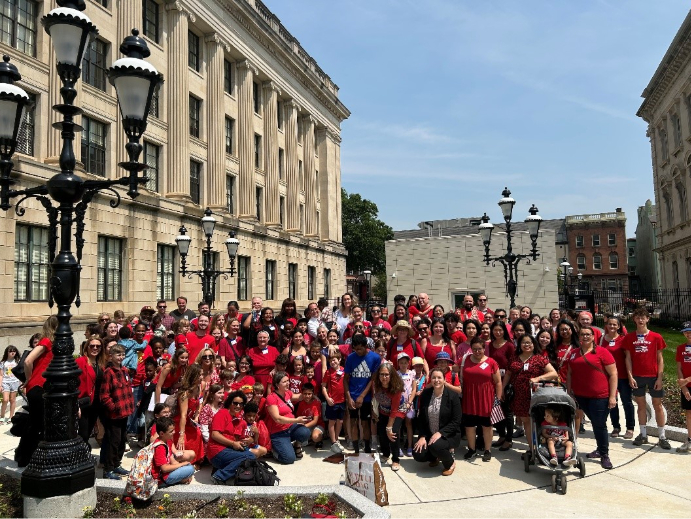
In Rhode Island, H8531—which failed to advance—would have allowed local school committees to delay or deny homeschooling based on pending attendance allegations or vague judgments about a parent’s “competency” or “capacity.” That would have turned homeschooling from a parental right into a privilege controlled by local officials.
In Vermont, an amendment to H.930 that failed to advance would have created new notification, review, and compliance requirements for families accessing home education. It would also allow schools to raise concerns about a child’s withdrawal and trigger additional follow-up or intervention. That creates a subjective process that could have delayed families, increased paperwork, and given public schools greater authority over decisions that belong to parents.
Connecticut has gone further. HB 5468 creates a new category of “parent-managed learning,” requires annual intent-to-educate filings, adds new withdrawal requirements, expands data sharing, and introduces Department of Children and Families database checks.
During the legislative process, Connecticut’s own Department of Children and Families raised concerns that it lacked sufficient staff and resources to process the volume of new checks the bill would require. That should concern everyone. When child welfare resources are already stretched thin, they should be focused on children and families facing credible threats and genuine crises, not diverted toward routine checks on families making lawful education decisions.
Registration, government approval, data collection, discretionary review, and follow-up requirements can quickly become barriers that discourage families and delay urgent education decisions. The burden falls hardest on families who need flexibility most, including those responding to bullying, disability-related needs, mental health concerns, medical needs, religious convictions, or a school environment that is not working for their child.
Families should remain at the center of education decisions. States should remove barriers to opportunity, not create new ones.
Every family should have the right to direct their child’s education—including through homeschooling, microschools, hybrid programs, and every other form of learning they freely choose.
The freedom to build something better begins with trusting families.