One week ago, yes. every kid. foundation. released its fourth national poll for the year, on the heels of 14 state polls, and more than 60 interviews with parents across the country. Taken together, the findings point to a simple conclusion: public opinion is ahead of the public policy landscape, and that gap creates both a legislative and political opportunity heading into 2026.
As state legislatures convene and campaigns begin to take shape, lawmakers will face frustrated families, tighter budgets, and declining trust in institutions. The question is no longer whether the K-12 system needs to change. It is whether leaders are prepared for how far voters have already moved.
The Midterms Are Coming, and Education Is a Winning Issue
Education is a top-tier issue for voters heading into the 2026 midterms. Majorities consistently rate it as highly important to their vote.
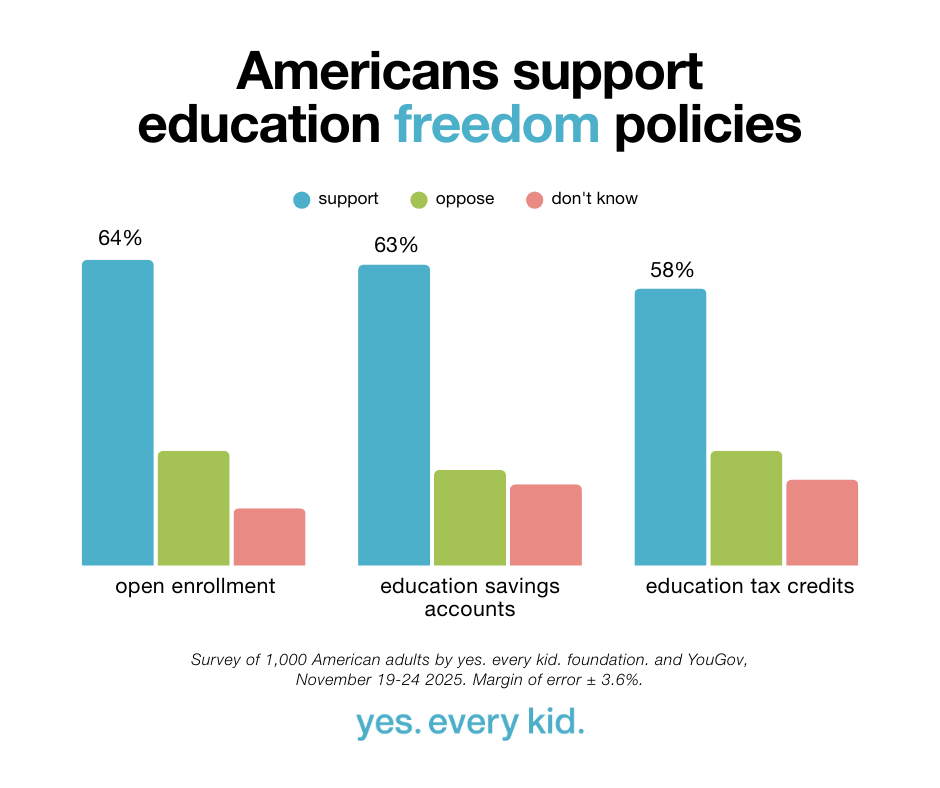
Contrary to how education freedom is often framed, policies like open enrollment, education savings accounts (ESAs), and education tax credits are not politically risky. They command majority support nationally, with even stronger backing among parents. This support has remained stable across multiple years, audiences, and geographies.
Importantly, support is not passive.
Voters say they are more likely to reward lawmakers who back family-first education policies and more likely to be disappointed when lawmakers block reform. In this environment, supporting education freedom is politically reinforcing, while opposition increasingly carries risk.
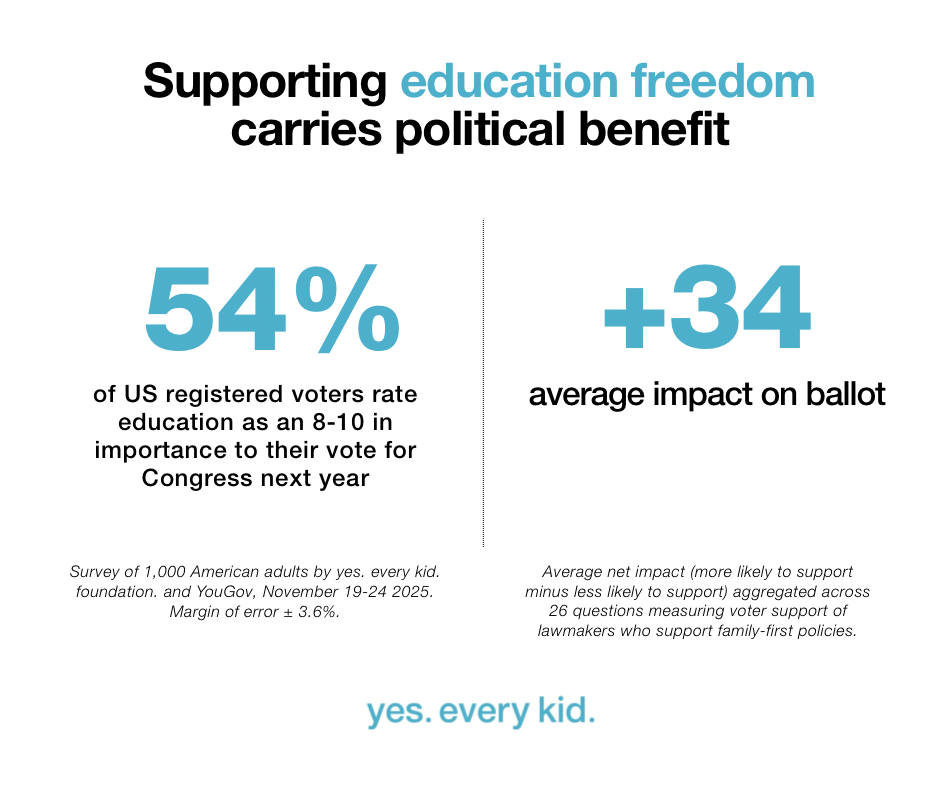
The political takeaway is straightforward: supporting family-first education policies is not a liability. Voters say they will reward it, and failing to respond to those expectations poses a real political risk.
The Customization Gap is an Opportunity
Americans believe children have different needs and that education should reflect those differences. Nearly three-quarters say families should be able to customize an education to meet a child’s needs. Yet only a small minority believe today’s K-12 system allows for that level of customization.
Parents experience this gap directly. They know what their child needs and see rigid, unresponsive systems standing in the way.
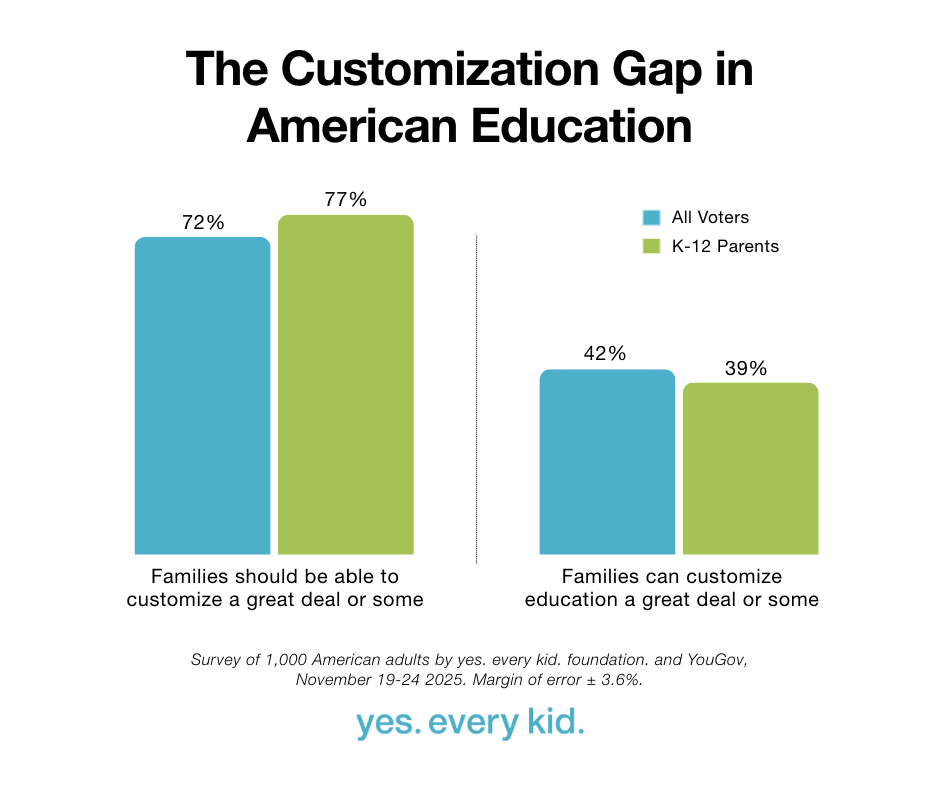
This flexibility gap is not just a critique of the status quo. It is an opening. Policymakers who lean into customization, choice, and portability are responding to a widely felt problem, not pushing a fringe agenda.
Schools Are Not Accountable to Parents, and Families Know It
For years, school accountability has been defined around testing, reporting, and compliance. Parents reject that definition.
When asked who schools should be accountable to, parents overwhelmingly say families, not administrators or bureaucracies. Standardized testing does not register as accountability for them.
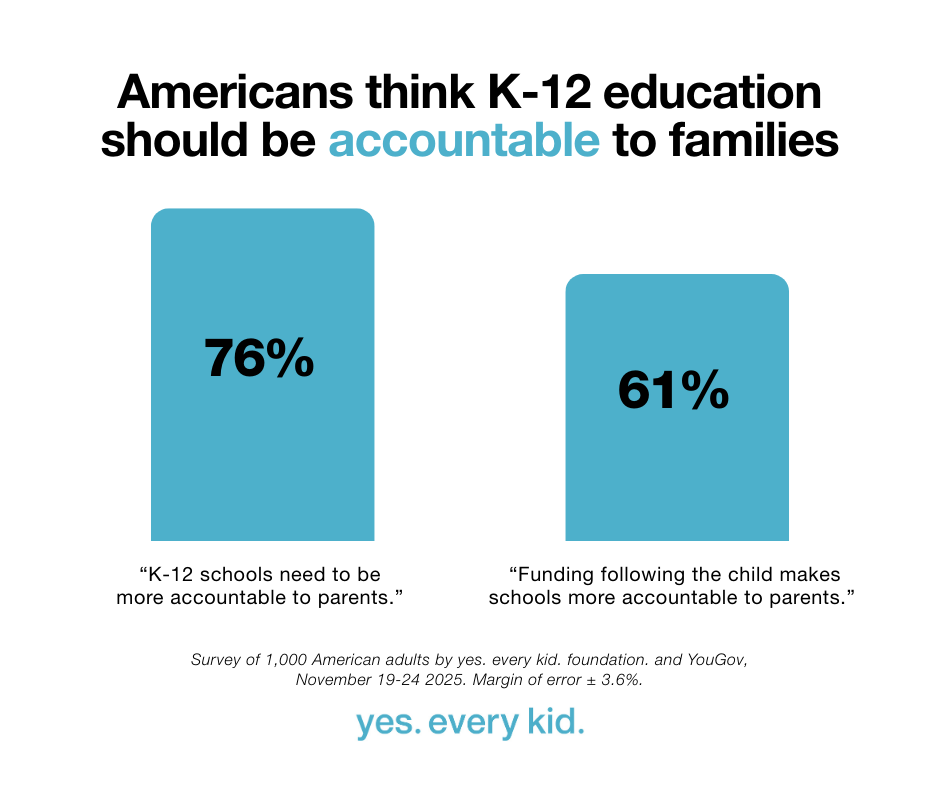
Parents define accountability through agency: the ability to choose, to leave when something is not working, and to take education funding with them. Majorities agree that schools become more accountable when funding follows the child.
Claiming that schools are already accountable to parents rings hollow to families who cannot easily switch. Lowering the real and fiscal costs of switching is what makes accountability real.
Families Want Something Different, Not Just “Better”
Parents are not asking for incremental improvement to the existing system. They are asking for something different.
In interviews and focus groups, parents talk about fit, dignity, and whether their child is known. They want education options that adapt to their child, not systems that demand conformity. This aligns with broader polling showing strong support for universal education freedom, tax credits, and policies that put families in control. It also reflects deep skepticism toward centralized decision-making. Voters trust parents and states far more than distant federal institutions.
What This Means Heading Into 2026
The past year of research points in one direction. Families are ready for a system built around choice, customization, and accountability to parents.
The political risk in 2026 is not moving too quickly, it is defending a system voters no longer believe serves our children.